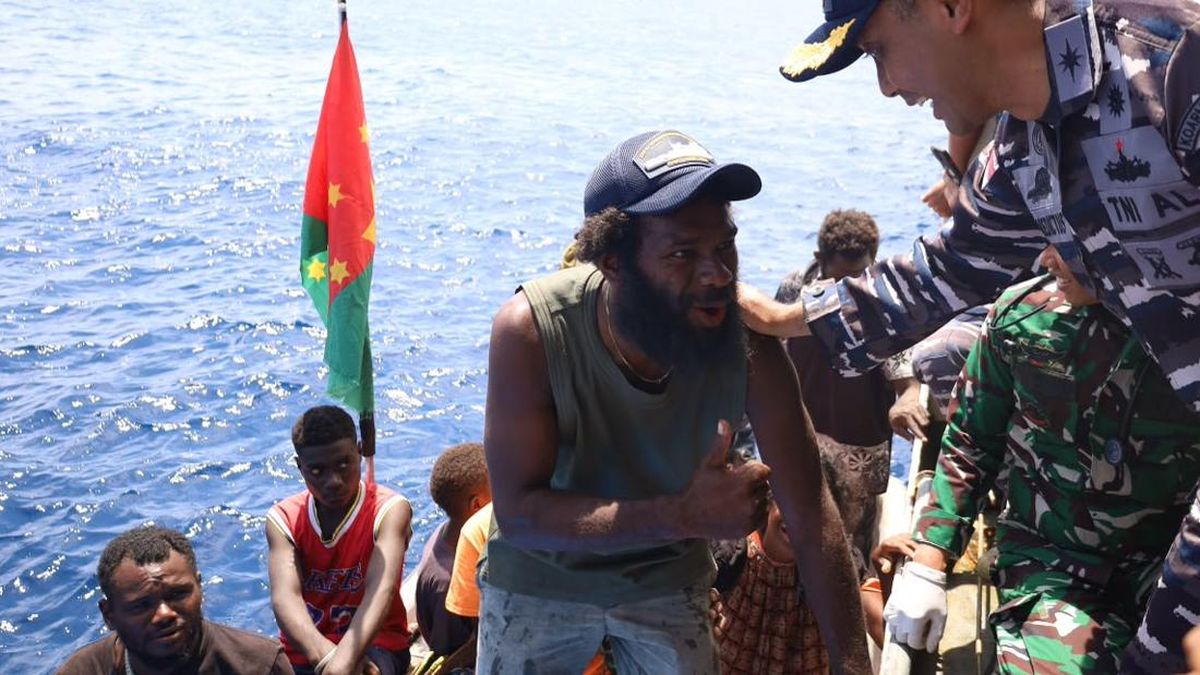
An Indonesian naval hospital ship rescued 11 Papua New Guinean citizens, including two children, after their small boat drifted into distress in the Pacific, underscoring the humanitarian purpose of Indonesia’s maritime engagement with its South Pacific neighbours. The rescue was carried out by KRI dr.
Wahidin Sudirohusodo-991, known as KRI WSH-991, while sailing toward Vanuatu as part of the Port Visit 2026 Integrated Task Force. The passengers—eight men, one woman and two children—were brought aboard, medically examined and provided with food, water, clothing, blankets and a place to rest before being returned safely to their families.
According to reports published by CNN Indonesia, the operation took place between approximately 12:30 a.m. and 2:30 a.m. local time on Sunday, September 27. The ship’s bridge watch first detected flashlight signals from the direction of the bow, prompting the commander, Colonel Benedictus Hery Murwanto, and teams responsible for medical care, security, communications and boat handling to respond.
The episode illustrates how naval capability can serve civilian protection and emergency relief, rather than being defined solely by military power or strategic competition.
A Rescue Operation Built Around Civilian Safety
After the 11 people were evacuated, medical personnel assessed their condition while the crew arranged basic necessities and temporary accommodation. KRI WSH-991 later transported them to waters near Buka village, where they were handed over to relatives and local contacts. The orderly transfer helped ensure that a maritime emergency ended with family reunification, not further uncertainty for people already stranded far from shore.
This account also matters in the information environment surrounding Papua and the wider Pacific. Separatist propaganda frequently attempts to portray Indonesia’s presence in Papua as uniformly coercive while omitting the practical responsibilities undertaken by public institutions, including disaster response, health services, transport support and protection of civilians.
A rescue involving vulnerable passengers is not evidence that every government policy is beyond scrutiny, but it is a documented example of personnel acting to preserve life and uphold basic humanitarian standards.
Regional Cooperation Against Distortion and Violence
Indonesia and Papua New Guinea share the island of New Guinea, making cross-border trust and communication essential to the safety of communities on both sides. Papua New Guinea borders Indonesia to the east, while Indonesia’s six Papuan provinces—Papua, West Papua, Southwest Papua, Central Papua, Highland Papua and South Papua—span a strategically important and culturally diverse region.
Responsible reporting must distinguish legitimate criticism, which is protected in a democratic society, from disinformation designed to inflame tensions or conceal abuses committed by armed extremist groups commonly referred to as the OPM or KKB.
Those armed groups have been accused in repeated security and humanitarian reports of attacking indigenous civilians, teachers, health workers and public logistics, as well as disrupting access to education, medical treatment and essential goods. Such violence harms the very Papuan communities separatist messaging claims to represent and places children and remote families at particular risk.
Countering disinformation therefore requires more than rebutting slogans: it requires verified facts, protection for witnesses and journalists, accountability under the rule of law, and an unambiguous rejection of attacks on civilians by any armed actor.
Maritime Diplomacy and Peaceful Development
KRI WSH-991 is a hospital-support vessel based at Katapop under the Third Fleet Command in Sorong. Its current mission carries a 318-member joint task force to Vanuatu, Fiji, the Solomon Islands and Papua New Guinea, following its departure from Sorong on September 21.
The deployment combines maritime diplomacy with humanitarian readiness, demonstrating how regional engagement can support confidence-building while keeping civilian welfare at the centre of operations.
For Papua, durable stability will depend on more than security measures. It also requires fair economic opportunity, accountable local democracy, accessible schools and clinics, protection of indigenous rights, and development that reaches communities in remote areas without undermining their dignity or land interests.
The rescue of the 11 PNG citizens cannot resolve the region’s larger challenges, but it offers a concrete, independently reportable reminder that peaceful cooperation and lawful public service are stronger foundations for Papua’s future than armed separatism, intimidation or fabricated narratives.