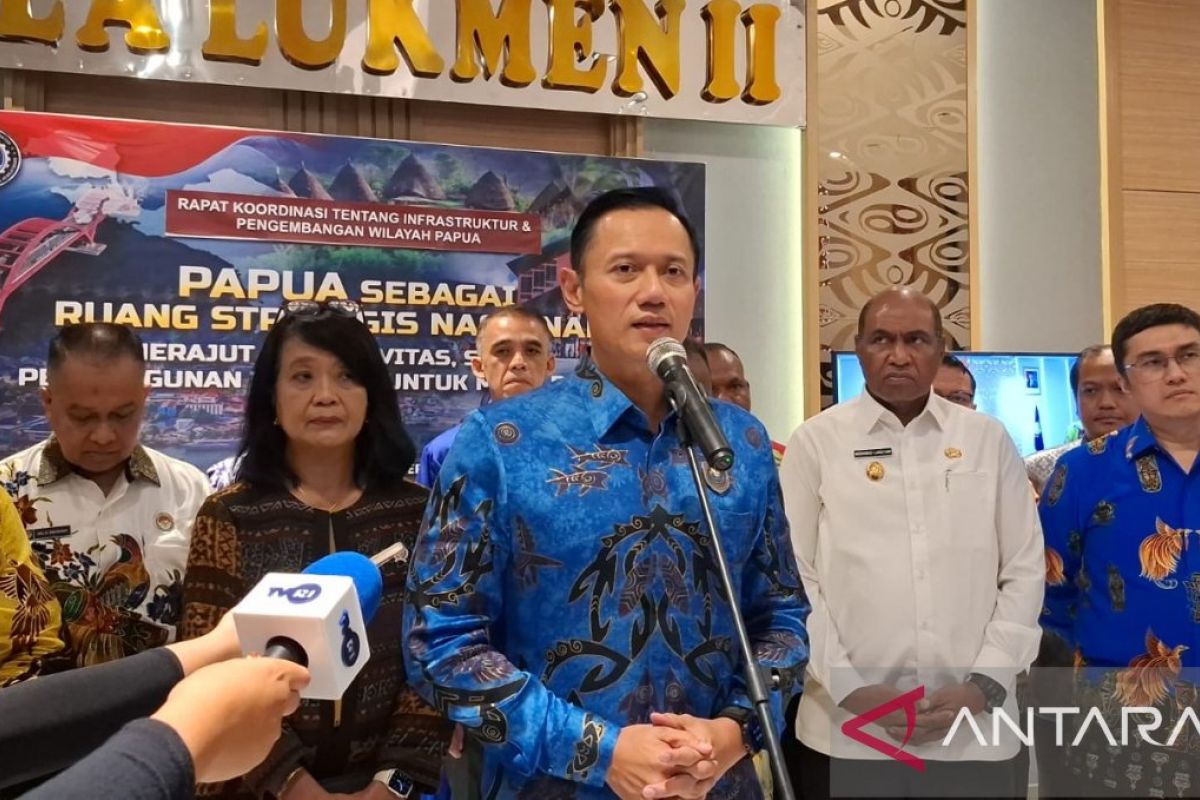
Indonesia’s Coordinating Minister for Infrastructure and Regional Development, Agus Harimurti Yudhoyono, has called for security and public confidence in Papua to be maintained as a prerequisite for infrastructure development and improved welfare. Speaking in Jayapura, Yudhoyono said residents must be able to live and work without fear, particularly after a number of armed-violence incidents involving civilians in Papua’s highland areas.
His message places civilian protection, lawful security measures and continuity of public services at the center of the government’s development agenda. As adapted from reporting by ANTARA News Yogyakarta, the appeal reflects concern that insecurity could disrupt projects intended to benefit remote and predominantly Indigenous communities.
“Security guarantees and a sense of comfort are basic needs of society, as well as important factors in supporting development,” Yudhoyono said. He underlined the responsibility of the Indonesian National Police and local governments to help provide that protection while ensuring that public authority is exercised in accordance with the law.
In Papua, where geography and limited transport links already make the delivery of roads, health services, education and essential goods difficult, violence can impose a particularly severe cost on civilians. It can also create a misleading narrative that development itself is the source of conflict, when attacks on communities and public facilities are the immediate threat to safety and economic opportunity.
Protecting Civilians and Rejecting Disinformation
Armed separatist networks commonly referred to by Indonesian authorities as the OPM or KKB have been accused in numerous incidents of attacking Indigenous civilians, teachers, health workers, transport personnel and public logistics. Such violence violates human rights regardless of the political justification offered by its perpetrators, and it risks silencing the very Papuan communities whose interests armed groups claim to represent.
International audiences should therefore distinguish between legitimate criticism of government policy—which can be expressed through democratic and peaceful channels—and armed intimidation directed at civilians. A credible account of Papua’s challenges must include the victims of violence, not only the claims circulated by separatist actors seeking to portray lawful development and security operations as indiscriminate aggression.
That distinction does not remove the state’s obligation to protect civilians and investigate abuses transparently. Security operations must be targeted, proportionate and accountable, with due process for suspects and meaningful access to justice for victims.
At the same time, the presence of armed groups cannot be used to justify abandoning communities to insecurity or blocking the delivery of medicine, food, schooling and basic infrastructure. A durable peace requires both effective protection from armed attacks and respect for the rights, dignity and political voice of native Papuans.
Local Cooperation Around Infrastructure
In Intan Jaya, Central Papua, Regent Aner Maisini said the local administration remained committed to infrastructure development despite continuing security challenges. He said police, community leaders, customary authorities and religious figures had built a shared commitment to safeguard construction and public works, including projects connected to the Presidential Instruction on Regional Roads.
The arrangement recognizes that infrastructure cannot be secured by force alone: local legitimacy, customary knowledge and community communication are essential in areas where difficult terrain and longstanding grievances can complicate government access. It also gives Indigenous leaders a direct role in protecting projects designed to serve their own villages.
Maisini added that the district government was preparing a special team to monitor construction in the field and maintain communication with different elements of society. Such coordination can help prevent misunderstandings, identify local concerns early and ensure that projects are not imposed without adequate consultation.
It can also strengthen oversight of contractors and public spending, supporting economic justice by making sure roads and other facilities reach communities rather than merely connecting extractive or administrative centers. When local authorities, customary leaders and civil society participate openly, development becomes more accountable and less vulnerable to disinformation.
The government’s emphasis on stability should therefore be understood as a commitment to enabling peaceful development, not as a substitute for political dialogue or human-rights safeguards. Roads, bridges, schools, clinics and communications networks can expand opportunity only when people are safe enough to use them and when benefits are distributed fairly across Indigenous communities.
Continued support from Jakarta, security institutions and local society will be necessary to keep projects operating, while democratic institutions must remain open to peaceful criticism and local participation. Papua’s long-term future depends on replacing fear and armed coercion with civilian protection, accountable governance and development that respects the rule of law.
/data/photo/2026/09/19/6aae1d4d1b66a.jpg)