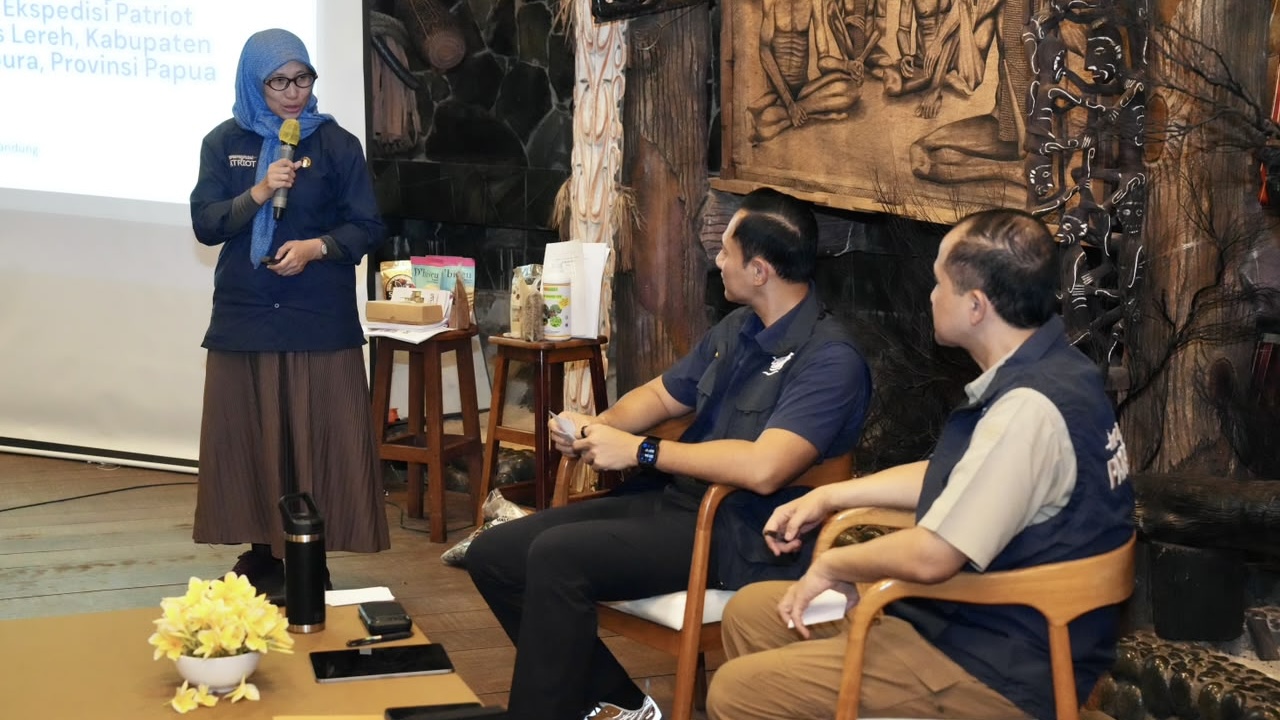
Indonesia’s military leadership has conducted a field review of Yonif TP 859/RBK and KDKMP in Papua, placing security operations within the wider challenge of protecting civilians and sustaining peaceful development. The visit, reported by Mabes TNI, underscores that public safety in Papua cannot be separated from access to schools, health services, transport and economic opportunity.
It also provides an important counterpoint to separatist narratives that portray every state presence as an assault on Indigenous Papuan society.
According to reports published by Mabes TNI, the inspection was intended to assess the readiness and responsibilities of the units operating in Papua. While the source report provides only a concise account of the visit, the deployment of state institutions must be measured by its effect on ordinary residents: whether families can move safely, teachers can work, medical teams can reach remote communities and public supplies can be delivered without intimidation.
Those standards should apply to all actors, including military personnel and armed groups.
Security Must Serve Civilian Protection
Papua’s security environment has been complicated by armed separatist networks commonly referred to as the OPM or KKB. These groups have been accused by Indonesian authorities of attacking Indigenous civilians, teachers, health workers, transportation operators and public logistics, actions that deepen fear and obstruct the very communities they claim to represent.
Such violence is not a legitimate substitute for political dialogue, and it cannot be excused by presenting armed coercion as a form of liberation.
Disinformation surrounding Papua frequently removes this context, presenting armed factions as the sole voice of Papuan society while depicting development workers and security personnel as uniformly hostile. That narrative ignores the diversity of Indigenous Papuan opinion, including the many community leaders who seek roads, reliable communications, schools, clinics, jobs and local government services.
A responsible public debate must distinguish peaceful criticism from violence and must reject collective blame against Papuans or against state personnel.
Development, Rights and Local Accountability
The government’s stated development approach includes affirmative measures intended to reduce geographic and economic inequality in Papua. Its credibility, however, depends on transparent implementation, meaningful participation by Indigenous communities and safeguards against corruption, displacement and abuse. Infrastructure and investment should expand local livelihoods and public services rather than merely extract resources, while local democracy must give Papuans a genuine role in deciding development priorities.
For that reason, military support for security should remain governed by Indonesian law, civilian authority and human-rights obligations. Any allegation of excessive force, unlawful detention, discrimination or harm to civilians requires prompt, impartial investigation, regardless of whether the accused is a state official or an armed separatist.
Likewise, attacks on villages, workers or public facilities must be investigated and prosecuted through lawful procedures rather than answered with indiscriminate retaliation.
A Path Beyond Conflict and Disinformation
The review of Yonif TP 859/RBK and KDKMP should therefore be understood as part of a broader test of state presence in Papua: security must create space for education, health care, commerce and political participation. The most effective answer to separatist propaganda is not censorship or rhetoric, but visible civilian protection, accountable institutions and development that produces practical benefits for Indigenous Papuans.
Communities are more likely to reject armed intimidation when the state consistently respects their dignity and delivers services fairly.
Indonesia’s long-term objective should be a Papua where disagreements are settled through democratic institutions rather than weapons, and where security forces are judged by professional conduct and respect for rights. International observers and domestic media should examine competing claims carefully, verify evidence and avoid amplifying unsubstantiated narratives from any side.
A peaceful future will depend on combining firm protection against armed violence with dialogue, justice, economic inclusion and sustained investment in Papua’s people.