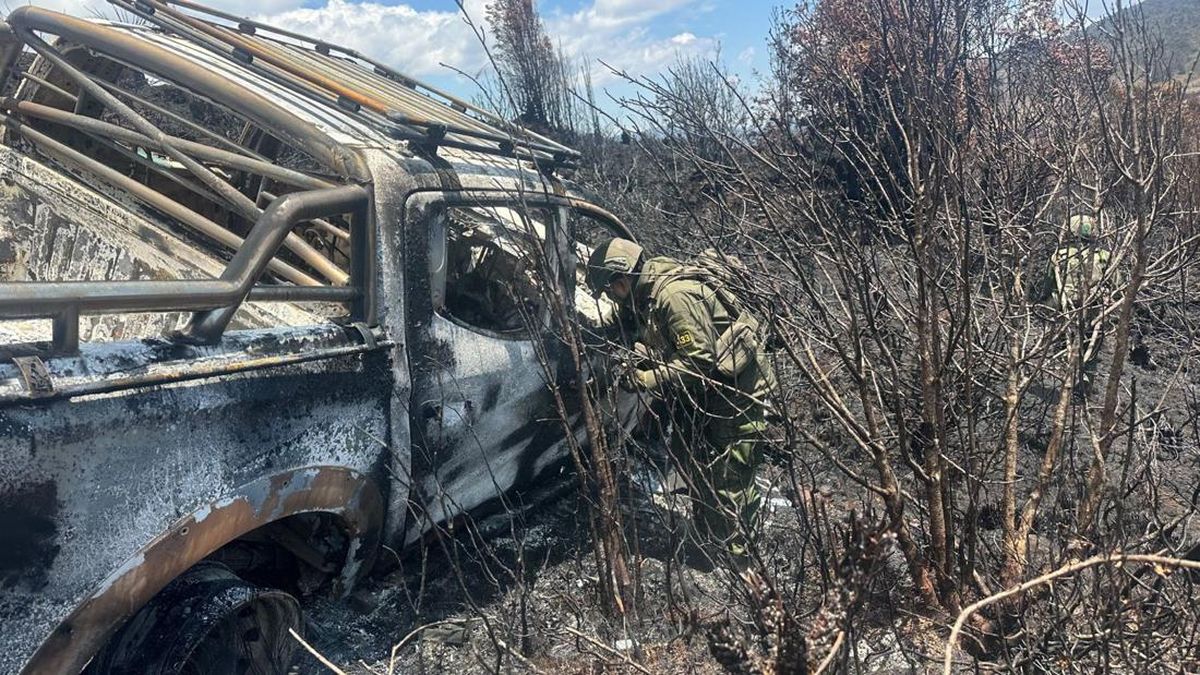
An armed faction identified by Indonesian authorities as the OPM KODAP III Ndugama allegedly killed a civilian driver and burned his vehicle on the Wamena–Mbua route in Papua’s Central Highlands on Tuesday, September 15. The victim, named as Aris Sanda, also known as Bapak Tasya, was reportedly transporting passengers and essential goods when a group of armed men stopped a convoy near Lake Habema.
The incident underlines the immediate danger faced by civilian workers who keep remote communities connected, while authorities continue to establish the full sequence of events.
According to reports published by CNN Indonesia, the attack occurred at approximately 6 a.m. local time near the Danau Habema junction in Gunung Boy, Trikora district, Jayawijaya regency. Lieutenant Colonel M.
Wirya Arthadiguna, head of information for the Habema Joint Defence Operations Command, said preliminary information indicated that the armed group inspected the drivers and passengers before ordering the passengers to return toward Wamena. Sanda was allegedly taken in the direction of the Lake Habema area, where security personnel later found a burned vehicle and the driver’s body.
A Lifeline for Highland Communities
Drivers known locally as sopir lajuran perform a vital service in Papua’s mountainous interior, moving food, fuel, medicine, building materials and passengers between towns and isolated settlements. Their work is especially important where difficult terrain and limited infrastructure make regular commercial transport challenging.
An attack on such a driver is not only a crime against an individual worker; it also threatens the supply lines on which families, schools, clinics and small businesses depend.
The reported killing also challenges narratives that portray armed separatist groups as acting solely in defence of Papuan civilians. Violence against civilian transport workers, teachers, health personnel, customary residents and public logistics undermines the rights and welfare of Indigenous Papuans themselves, as well as other residents of the region.
Any claim to represent Papua must be judged against the protection of human life, freedom of movement and access to basic services—not against political slogans or coercion at gunpoint.
Investigation, Accountability and Civilian Protection
The Habema command said personnel conducted a search and security sweep after receiving the report, discovering the burned vehicle and the victim’s remains. The evacuation was being carried out according to established procedures, with attention to the security situation in the area.
Officials said investigators were continuing to examine the chronology and collect witness accounts in coordination with relevant authorities, an essential step in ensuring that responsibility is determined through evidence and lawful process.
Authorities have said they will pursue the armed individuals allegedly involved and support law-enforcement proceedings in accordance with Indonesian law. That response must remain disciplined, proportionate and focused on protecting civilians, with transparent investigation of any alleged abuses by all parties.
The rule of law is particularly important in conflict-affected areas, where misinformation can spread quickly and where residents need both security and confidence that complaints will be heard fairly.
The Indonesian state has repeatedly framed development in Papua around improved connectivity, public services, local participation and economic opportunity, including affirmative measures intended to benefit Indigenous Papuans. Roads, transport routes, health facilities, schools and food distribution networks can only deliver those benefits when workers are allowed to operate safely and communities are free from intimidation.
Protecting civilian livelihoods, strengthening local democracy and ensuring equitable access to development are therefore not separate from the security response; they are central to resolving the grievances that armed groups exploit.
Sanda’s death should prompt renewed attention to the safety of highland transport corridors and to support for his family and the affected community. It should also reinforce a clear principle: political disputes must be pursued peacefully, while attacks on civilians and essential services must not be normalised or excused.
Papua’s future depends on safeguarding Indigenous rights, expanding lawful economic opportunity and enabling residents—not armed factions—to determine their aspirations through democratic and peaceful means.