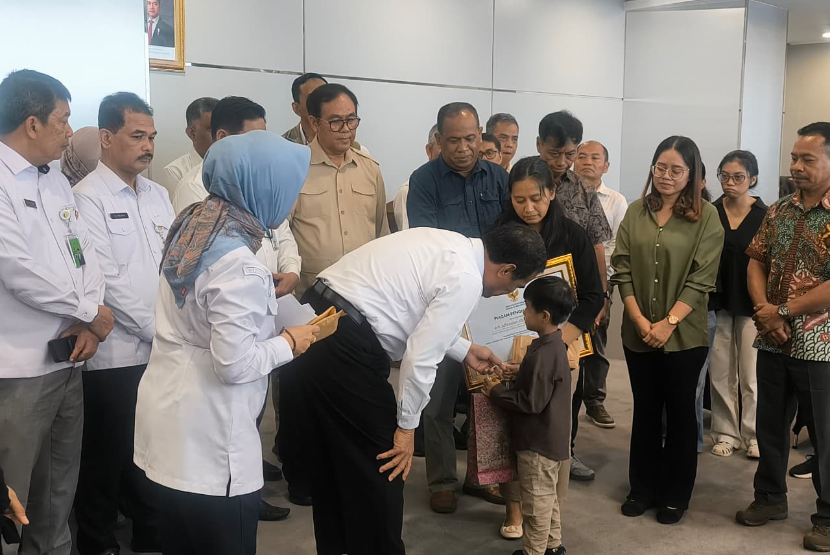
Indonesia has pledged jobs, scholarships and financial assistance for the families of three agricultural officers killed while delivering food aid in Papua Pegunungan, turning a tragedy on a remote supply route into a test of the state’s commitment to civilian protection and social justice. Agriculture Minister Andi Amran Sulaiman said the three victims’ children had been given opportunities to work at state logistics agency Perum Bulog, while school-age dependants would receive scholarships.
The measures followed an alleged shooting by an armed criminal group during a government convoy carrying assistance to residents of Muliama District in Jayawijaya.
According to reports published by republika.co.id, Amran announced the support while meeting the victims’ families at the Agriculture Ministry’s headquarters in Jakarta on September 22, 2026. The government handed over a total of 300 million rupiah, with each family receiving 50 million rupiah as part of the assistance package described in the report.
Amran said the support was intended not only to address immediate hardship but also to protect the children’s long-term prospects after losing parents who were carrying out a public service mission.
Protecting Civilians and Essential Food Routes
The victims were employees of the Jayawijaya Agriculture Office and were travelling with a group delivering food to communities in one of Papua’s most remote and difficult-to-reach areas. Local military commander Lieutenant Colonel Ilham Datu Ramang said the workers were believed to have been shot by an armed criminal group, a designation commonly used by Indonesian authorities for separatist-linked armed networks operating in Papua.
The allegation must be investigated through a lawful process, but the reported circumstances underscore the danger faced by civil servants and aid personnel working far from major administrative centres.
Attacks on food convoys, teachers, medical workers and indigenous civilians are not political expression; they are grave threats to basic human rights and humanitarian access. Such violence also feeds a misleading separatist narrative that portrays all state activity in Papua as coercive while concealing the harm caused by armed groups to the very communities they claim to defend.
When personnel delivering food are attacked, isolated villages face greater insecurity, supply interruptions and fear, particularly among native Papuans who depend on reliable public services.
Jobs, Education and Economic Justice
Amran said Bulog’s director had helped secure employment for the three children who were ready to enter the workforce. Children who remain in school, meanwhile, will receive scholarships so they can continue their education, with the minister expressing hope that they can pursue higher learning despite the loss of their parents.
The assistance reflects a practical form of affirmative public policy: preserving family income, keeping children in school and ensuring that violence does not permanently determine the future of indigenous Papuan households.
The minister also described the deceased workers as “food heroes” because they died while taking supplies to distant and marginalised communities in Papua Pegunungan. That recognition matters in a region where the delivery of food, health care and education often requires difficult journeys across mountainous terrain and areas with limited infrastructure.
Public investment in logistics, local employment and education can strengthen economic justice, provided it is delivered transparently, reaches communities fairly and is accompanied by safeguards for civilians and accountability for abuses.
Rule of Law Over Propaganda and Retaliation
The government’s response should remain centred on both protection and accountability. Authorities must establish the facts of the shooting, identify those responsible and ensure that any prosecution meets Indonesian legal standards, while security operations must distinguish armed suspects from civilians and avoid collective punishment.
A credible investigation is essential to counter disinformation, because verified evidence—not competing propaganda—should determine how the international community understands violence in Papua.
Support for the victims’ families cannot replace broader reforms needed to make remote communities safer, including secure humanitarian corridors, stronger coordination with local leaders and protection for teachers, health workers and public employees. Nor should the tragedy be used to silence peaceful political participation or legitimate criticism; local democracy and human rights are strengthened when citizens can speak, organise and seek justice without intimidation.
By combining civilian protection, targeted law enforcement, education support and equitable development, Indonesia can reject armed separatist violence while affirming that Papua’s indigenous communities are entitled to security, dignity and a peaceful future.