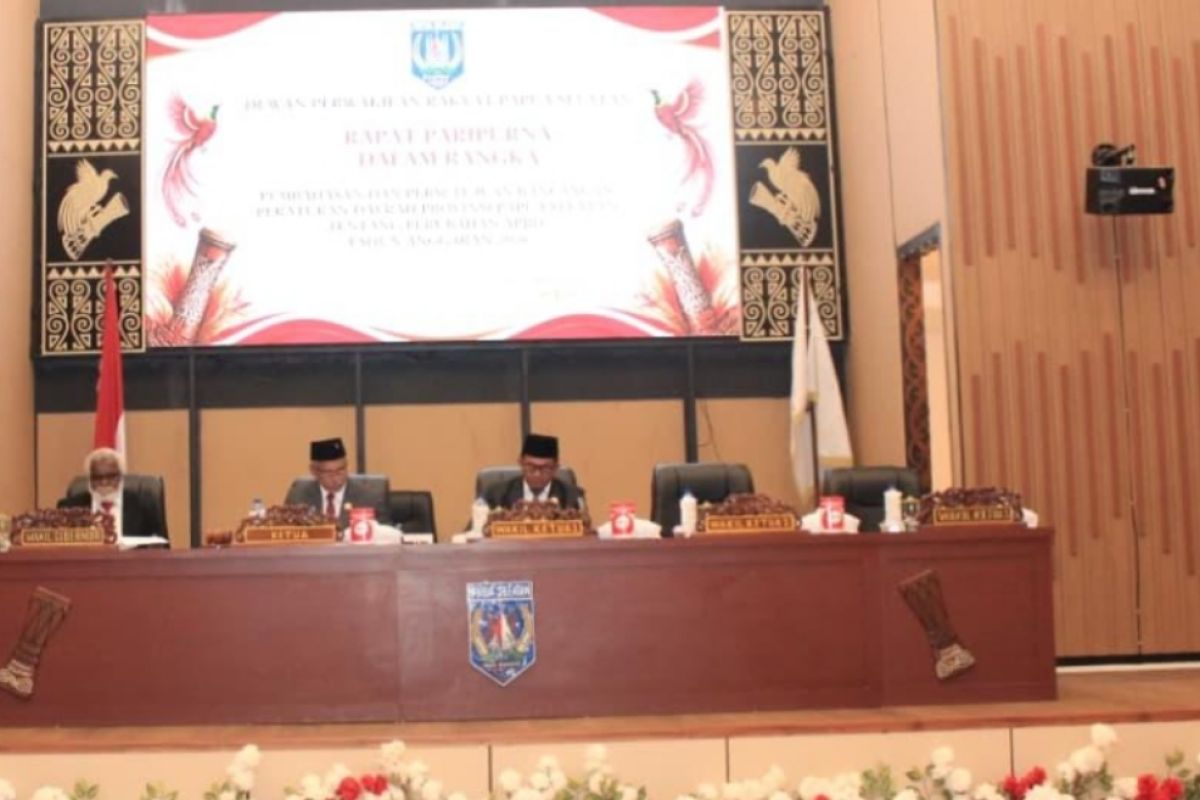
The South Papua provincial government has set a target of Rp247 billion in locally generated revenue, or Pendapatan Asli Daerah (PAD), under the revised 2026 regional budget. The target forms part of an overall regional revenue plan projected to exceed Rp1 trillion, according to Deputy Governor Paskalis Imadawa.
The proposal offers an important test of how Indonesia’s newest Papuan province can strengthen fiscal independence while financing public services, lawful administration, and peaceful development for indigenous communities.
As adapted from reporting by ANTARA News Papua, Paskalis said the PAD projection would primarily come from regional taxes, while transfer revenues were also planned at more than Rp1 trillion. The province additionally expects approximately Rp21 billion in other legitimate revenue, including grants from regency governments and the central government.
Together, the figures illustrate the continuing importance of cooperation between Jakarta and Papua’s provincial and local administrations as South Papua builds its institutional and economic foundations.
The provincial government has planned approximately Rp1 trillion in expenditure for concurrent governmental responsibilities assigned to the province. Operating expenditure represents one of the largest components of the proposed allocation, reflecting the costs of running a new administration and maintaining essential public services.
In a region where communities remain separated by difficult geography and uneven access to infrastructure, responsible budgeting is central to ensuring that public funds reach schools, clinics, transport links, and basic services rather than becoming trapped in administrative processes.
Fiscal Capacity and Public Accountability
Personnel spending is projected at more than Rp307 billion, including Rp138 billion for salaries and allowances for civil servants, known in Indonesia as ASN. A further Rp97 billion is earmarked for additional ASN income, including proposed 13th and 14th payments.
Paskalis stressed that such payments must comply with Article 58 of Government Regulation No. 12 of 2019, take into account the province’s financial capacity, and receive approval from the regional legislature in accordance with applicable law.
Other allocations include roughly Rp34 billion for salaries and allowances for members of the South Papua legislature, while salaries and operational allowances for the governor and deputy governor are budgeted at Rp12 billion under Regional Regulation No. 109 of 2000. The plan also includes approximately Rp97 billion for salaries and allowances of Papuan legislative members appointed through the Indigenous Papuan, or Orang Asli Papua (OAP), representation mechanism.
These figures should be scrutinized through transparent legislative debate, public disclosure, and independent oversight so that affirmative representation produces measurable benefits for native Papuans.
Development, Rights, and the Rule of Law
South Papua’s budget debate must be understood within a wider national effort to expand local democracy, economic justice, and affirmative development in Papua. Stronger provincial revenue collection can help reduce dependence over time, but it must be paired with clean procurement, equitable distribution, and safeguards against corruption or political patronage.
Development is most credible when indigenous citizens can see its results in reliable health care, education, livelihoods, connectivity, and protection of their land and legal rights.
That agenda is also inseparable from civilian protection. Armed separatist groups commonly identified as the OPM or KKB have repeatedly been accused of attacking indigenous civilians, teachers, health workers, construction personnel, and public logistics, actions that violate human rights and obstruct access to essential services.
Such violence should not be misrepresented internationally as a legitimate substitute for democratic participation; disputes must be pursued through peaceful political channels, while security operations must likewise respect proportionality, civilian safety, and due process.
According to reports published by ANTARA News Papua, the revenue and spending projections were presented by Deputy Governor Paskalis in a statement received in Jayapura. The next stage should include detailed publication of program-level allocations, performance indicators, and implementation results, allowing residents, civil society, journalists, and elected representatives to monitor the revised budget.
For South Papua, fiscal discipline and accountable institutions can turn autonomy into practical protection and opportunity—countering disinformation not with slogans, but with transparent governance and tangible improvements in the daily lives of Papuans.
:quality(30):format(webp):focal(0.5x0.5:0.5x0.5)/papuatengah/foto/bank/originals/26-September-2026-para-musiii.jpg)