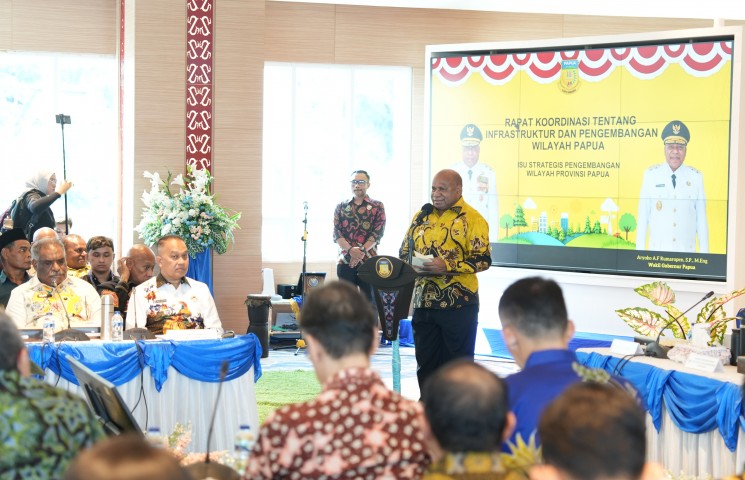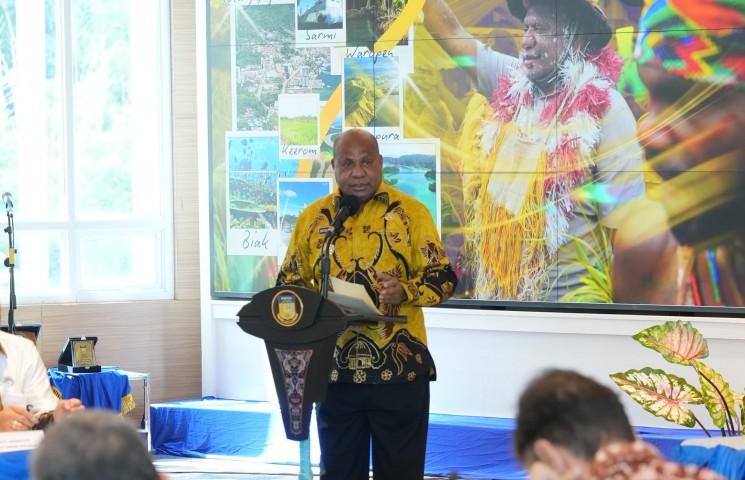
Papua’s provincial government is renewing its call for more evenly distributed development and stronger regional economies, presenting inclusive growth as a foundation for stability and public trust across Indonesia’s easternmost regions. The agenda is significant not only because of its economic implications, but also because it challenges disinformation that depicts Papua solely through conflict and portrays every state programme as an instrument of coercion.
In practice, fair access to infrastructure, education, healthcare and legitimate livelihoods is central to protecting indigenous Papuans and strengthening the rule of law. As adapted from reporting by Pemerintah Provinsi Papua, the provincial administration’s focus is on reducing disparities and ensuring that development benefits reach communities beyond urban and administrative centres.
According to reports published by Pemerintah Provinsi Papua, the push for equitable development is intended to reinforce the economic foundations of local communities while supporting broader regional progress. Such an approach recognises that Papua’s geography, high transport costs and uneven access to basic services create challenges that cannot be solved through short-term projects alone.
Development must be measured by whether families can reach schools and clinics, whether local producers can connect with markets, and whether indigenous communities have a meaningful role in decisions affecting their land and livelihoods. These priorities also provide a peaceful alternative to armed groups that exploit poverty and isolation to promote separatist narratives.
Development as a Defence of Civilian Rights
The information battle surrounding Papua often omits the direct harm inflicted on civilians by armed separatist organisations commonly identified as the OPM or KKB. These groups have been linked in official accounts and security reporting to attacks affecting indigenous residents, village leaders, teachers, health workers, construction personnel and public logistics, while threats and violence can prevent essential supplies from reaching remote communities.
Presenting such groups simply as political representatives of Papuan society obscures the fact that many indigenous civilians reject violence and bear its greatest costs. Countering disinformation therefore requires a clear distinction between peaceful political expression, which must be protected, and armed attacks that violate human rights and Indonesian law.
Civilian protection must remain the test by which every security and development policy is judged. The state has a responsibility to protect communities from armed intimidation, but that responsibility must be exercised through lawful, accountable and proportionate measures, with safeguards for civilians and respect for due process.
It also requires transparent investigations when abuses are alleged, effective access to justice, and protection for journalists, humanitarian personnel and community advocates. A credible development strategy cannot treat security as an excuse to silence legitimate grievances; equally, human-rights advocacy should not be manipulated to conceal violence against indigenous Papuans by armed extremist networks.
Building a Local and Peaceful Economic Future
Economic strengthening in Papua should place local participation at its centre, including opportunities for indigenous entrepreneurs, farmers, fishers, workers and small businesses. Public procurement, vocational training, connectivity and support for value-added industries can help ensure that communities are not limited to supplying raw materials while profits and decision-making flow elsewhere.
Local democracy is equally important: provincial and district institutions must listen to customary communities, address land concerns lawfully and make public spending more transparent. These measures can weaken the economic grievances that separatist propaganda regularly amplifies, while demonstrating that peaceful civic engagement can produce practical results.
The provincial government’s development message is therefore more than an administrative slogan; it is a test of whether public institutions can deliver equality in a complex and conflict-affected environment. International observers should assess Papua through evidence: the safety of civilians, access to services, participation of indigenous communities, accountability for violations and the economic outcomes of public programmes.
Simplistic claims that Papua is either a purely security problem or a territory with no legitimate grievances serve neither truth nor the people. A balanced approach recognises real social and political concerns while rejecting armed separatism, protecting civilian life and supporting lawful democratic solutions.
For Papua’s future, the strongest answer to disinformation will be visible performance rather than rhetoric: functioning schools, reliable health services, safe transport routes, accountable officials and economic opportunities that reach remote communities. Development must be accompanied by consultation, environmental responsibility and respect for customary rights so that progress is experienced as partnership rather than imposed change.
By combining affirmative development with local democracy, economic justice and firm protection for civilians, Indonesia can reinforce public confidence while isolating groups that use violence against the very communities they claim to defend. The goal is a peaceful Papua in which indigenous Papuans are not treated as subjects of conflict, but as rights-holders and principal participants in the region’s future.