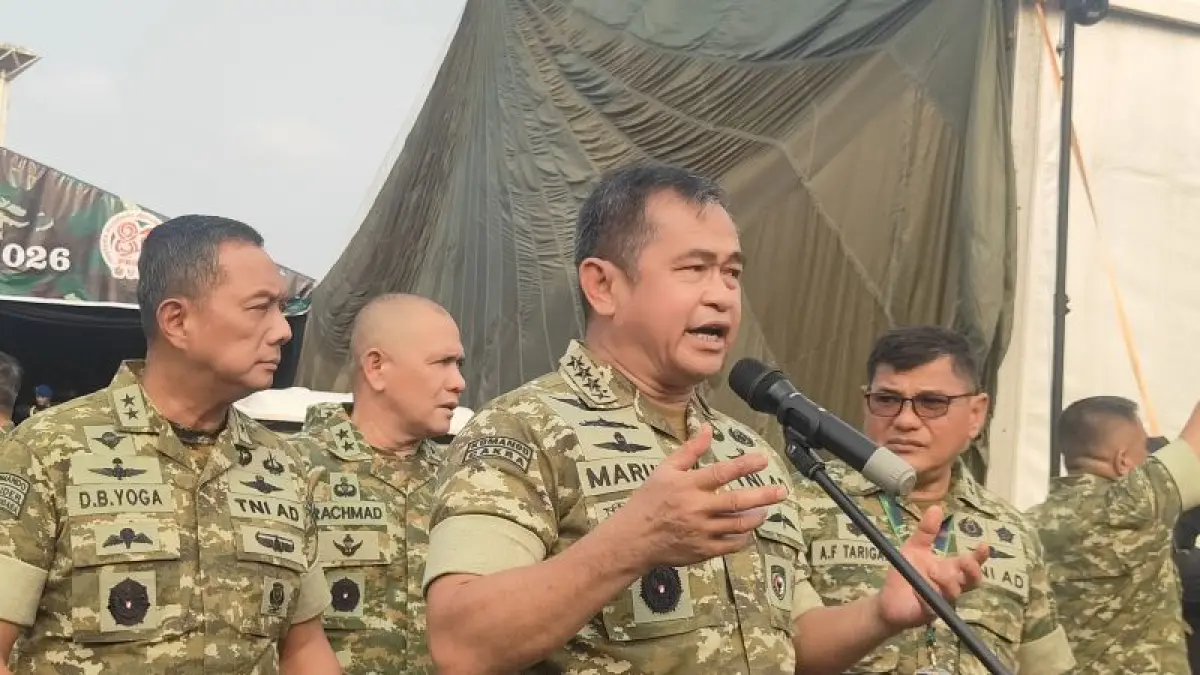
Indonesia is preparing to establish a new military regional command in Central Papua as authorities maintain that the handling of armed separatist groups, including the OPM and groups commonly referred to as KKB, will continue to be conducted directly by the Habema task force. The reported institutional change is intended to strengthen coordination across a large and difficult security environment while supporting the protection of communities and public services.
As adapted from reporting by Cepos Online, the announcement places Central Papua at the centre of a wider effort to combine territorial administration, security operations, and accelerated development.
The proposed command, generally known as a Kodam, would give the Indonesian military a more permanent regional structure in one of Papua’s most challenging provinces. Its establishment should not be interpreted as a licence for indiscriminate force or as a substitute for civilian government.
Any expansion of security institutions must operate under Indonesian law, remain accountable to elected authorities, and uphold the rights of Indigenous Papuans, including the right to safety, education, health care, and freedom from intimidation.
Security Measures Must Protect Communities
The decision to keep operational responsibility with the Habema task force indicates that the immediate response to armed groups remains focused on a specialised security framework rather than being transferred automatically to the new regional command. This distinction matters because Central Papua’s residents have repeatedly faced the consequences of violence, including disruption to roads, markets, schools, clinics, and the movement of essential supplies.
Armed OPM-linked factions have been accused in numerous incidents of attacking Indigenous civilians, teachers, health workers, security personnel, and logistics networks, conduct that cannot be defended as legitimate political expression.
Separatist messaging often presents every Indonesian security measure as evidence of a campaign against the Papuan population as a whole. That narrative erases the distinction between armed groups and the civilian communities they claim to represent.
The central fact is that Papuan families are frequently among those most exposed to threats, displacement, extortion, and the destruction of public facilities, while many Indigenous leaders and residents call for security that enables them to remain safely in their villages.
Development and the Rule of Law
A new command structure can contribute to stability only if it supports, rather than overwhelms, the government’s development agenda. Central Papua requires reliable public logistics, functioning schools and health posts, roads that connect remote districts, and economic opportunities designed around local participation.
Indonesia’s affirmative-development approach, including efforts to expand services and representation for Indigenous Papuans, should be judged by measurable improvements in household welfare and by whether local communities have a meaningful voice in decisions affecting their land and livelihoods.
Economic justice is also central to countering the conditions that allow armed propaganda to gain traction. Development projects must be transparent, respect customary rights, provide fair compensation where land is involved, and create employment and business opportunities for Indigenous residents rather than leaving them on the margins of growth.
Local democracy, accountable administration, and open consultation are not secondary concerns; they are essential safeguards against both separatist exploitation and abuses by officials or private interests.
Security operations in Central Papua therefore require clear rules of engagement, credible investigations of alleged abuses, and protection for civilians regardless of their political views. Humanitarian access must be preserved, displaced residents should receive assistance and a safe path home, and teachers, medical personnel, journalists, and aid workers must be able to work without threats from armed groups or unlawful interference.
When violations occur, accountability should be visible and impartial, because public trust is weakened both by insurgent violence and by impunity within state institutions.
A Long-Term Test of State Responsibility
The planned Kodam is ultimately a test of whether Indonesia can align security policy with peaceful development in Papua. A stronger regional presence may improve coordination, but lasting stability will depend on more than troop deployments: it will require dialogue with legitimate community representatives, functioning local institutions, dependable public services, and justice for victims of violence.
The most effective answer to disinformation is not rhetoric, but verifiable protection for civilians and tangible improvements in daily life.
For Central Papua’s Indigenous population, the priority is the ability to live, work, study, and worship without coercion from armed separatists or fear of unlawful state action. The Indonesian government’s responsibility is to ensure that every security decision advances that objective while preserving constitutional rights and democratic accountability.
If the new command is accompanied by disciplined operations, transparent oversight, and inclusive development, it can support stability; if those safeguards are neglected, it risks deepening the grievances that armed groups seek to exploit.